Cricket news · India tour of Zimbabwe · 26 July 2026
Vaibhav Sooryavanshi becomes first player to register multiple T20I fifties before turning 16
· Playcomesports editorial desk · Based on The Times of India match report from the third India–Zimbabwe T20I in Harare
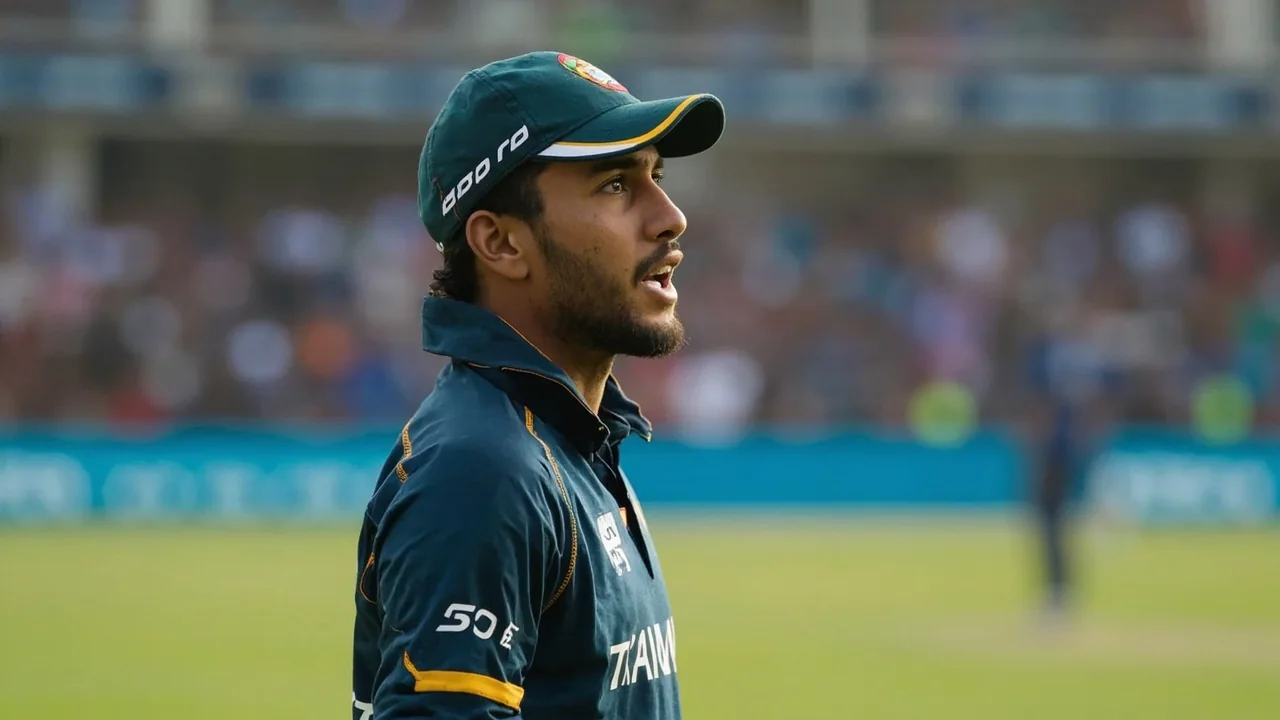
Fifteen-year-old Vaibhav Sooryavanshi has become the first player in men's international cricket to record multiple half-centuries before turning 16. The opener reached his second T20I fifty in 31 balls during the third and final match of India's tour of Zimbabwe at Harare Sports Club on Sunday, 26 July 2026, finishing on 81 off 48 deliveries as India posted 192/5 after choosing to bat.
Until Sunday, only Nepal's Kushal Malla had previously cleared fifty in men's international cricket before his 16th birthday, with one such innings to his name. Sooryavanshi now has two. The shift is narrow on paper — one innings, one extra fifty — but it puts a teenage Indian batter alone at the top of a list that includes every men's international debut since the format's first series.
The India–Zimbabwe T20I series was a working tour for the senior side and a development assignment for a clutch of teenagers, with Sooryavanshi opening alongside Abhishek Sharma. Harare's surface and a short boundary line meant that any opener who found rhythm early was always likely to clear fifty. Sooryavanshi did that and then some: he brought up his second T20I fifty in 31 balls, finished on 81, and set the platform for a total that Zimbabwe were never fully at the races with.
The Harare innings, ball by ball
Sooryavanshi's start was measured rather than explosive. He took 11 from his first 10 balls and 26 from his first 20, working the gaps square of the wicket and behind point. The acceleration began in the middle phase. Off-spinner Sikandar Raza, Zimbabwe's most experienced bowler, was launched over long-on for a 102-metre six — the longest of the innings and the moment the dugout relaxed. Brad Evans was then driven straight down the ground for four off a near-yorker, a shot that drew sharp commentary from the broadcast team for the head position and weight transfer under a full-blooded length.
His dismissal was a captaincy decision rather than a batting error. Wesley Madhevere drew the leading edge with a slower ball outside off, and Brad Evans held a simple catch at long-off to end a 75-run partnership with Ishan Kishan and a 50-run stand with captain Shreyas Iyer, who made 27. India closed on 192/5.
Kishan's 29 at number three was the supporting act. The two young openers traded risk and consolidation in turn, and when the platform was set, the middle order accelerated. For a fantasy desk watching the broadcast, the underlying detail was the strike rotation against spin — Sooryavanshi's running between the wickets was unusually crisp for a 15-year-old, which directly explains the 11-from-10 start rather than a more typical 6-from-10.
What the record actually says
The line in the record books now reads: most men's international fifty-plus scores before turning 16 — two (Vaibhav Sooryavanshi, India). The previous holder, by the narrowest of margins, was Kushal Malla, who reached fifty in an ODI against the United States in 2024 at 15 years and 309 days. Sooryavanshi's first T20I fifty came in his debut series earlier in this India–Zimbabwe tour.
Two qualifications matter. The men's international game is narrower than the women's — fewer countries, fewer fixtures, and therefore a shorter sample. And "before turning 16" is a tight window: it covers roughly 24 months of cricket at most. A record set inside that window is fragile by design. Sooryavanshi will be 16 in roughly seven months, and his hold on this particular record depends on no other teenager breaking it first.
It is also worth noting what the record does not say. It is not a tally of centuries, not a strike-rate benchmark, and not a "youngest to" any specific milestone. Two half-centuries is a small but precise line — and "first player to cross it" is a phrase that can only be used once.
Reading the partnership numbers
The two stands that mattered most were the second-wicket pairing with Ishan Kishan and the third-wicket stand with Shreyas Iyer.
The 75-run Kishan partnership came at a run a ball with controlled risk. Sooryavanshi played the accelerator's role when spin came on, and Kishan absorbed the pace bowlers' middle-overs squeeze. The 50-run stand with Iyer tilted slightly more conservative: Iyer's 27 came at a lower tempo and Sooryavanshi's cameo continued to work the gaps. The pattern is the kind of pairing Indian cricket has tried to build for years at the top of the order — a young boundary-hitter alongside an experienced middle-order anchor — and it produced a platform of around 130 in 14 overs.
For fantasy readers tracking role splits, the most useful detail is that both partnerships sat in the 8–13 over phase, when Harare's ground dimensions and a slightly used pitch still favour the batter. Neither stand depended on a powerplay burst; both depended on strike rotation against spin. That is a smaller, more repeatable signal than the headline six.
Abhishek Sharma's lean run at the other end
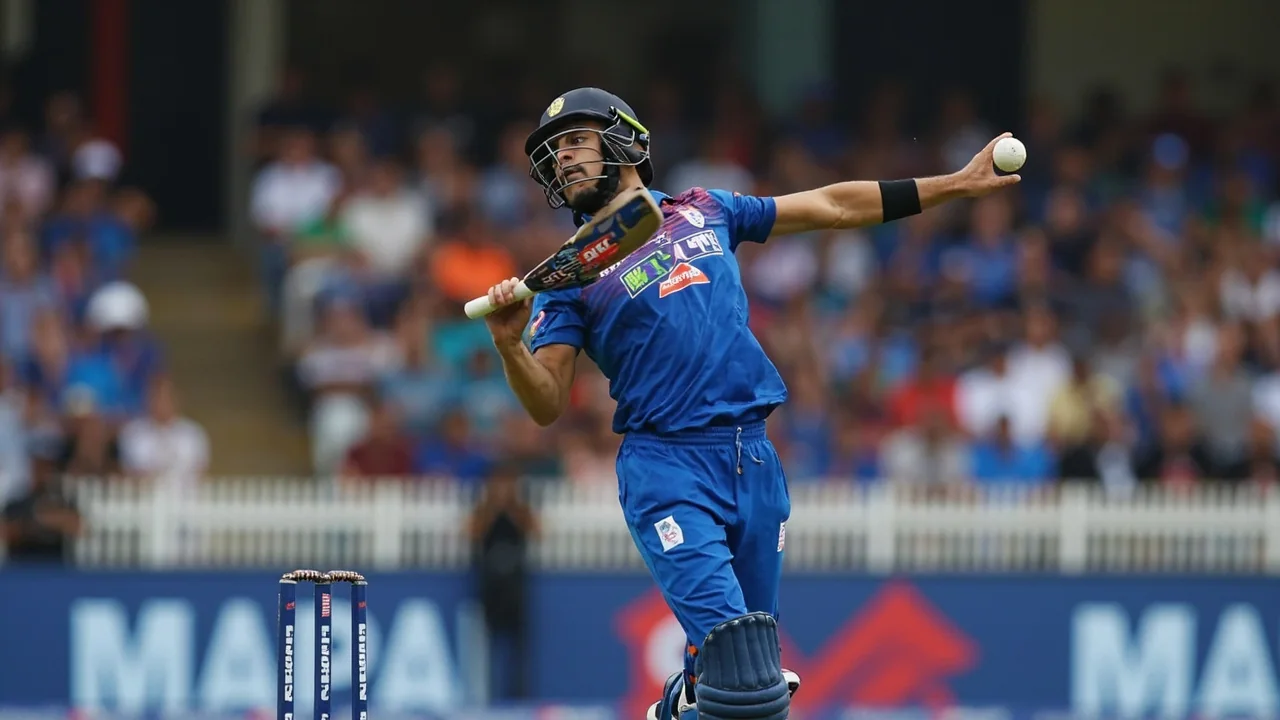
The match also extended a quieter story. Abhishek Sharma, opening with Sooryavanshi, fell for 2, edging Blessing Muzarabani to wicketkeeper Tadi Marumani. That is his sixth single-digit score in a row: 10, 16, 3, 1, 8 and 2, dating back to the third T20I against England at Trent Bridge in Nottingham. For a player whose fantasy ownership still sits on last season's boundary-hitting reputation, the form drift is now long enough that the data has to be respected rather than ignored.
This is not a story about Sharma being dropped or replaced. It is a story about a working seam-bowling unit in Harare finding his trigger movement, and about a top-order spot opening up at the same tour where the teenager at the other end is rewriting the record book. The two stories belong together in any honest match report.
What this means for fantasy desks
For an Indian fantasy desk, the immediate question is not "is this kid any good" — that has been answered three series in a row — but "how do we price a teenage opener who is still technically school-age, who plays international cricket on tours and is unavailable for most of the IPL window?". Sooryavanshi does not appear in the IPL 2026 squad lists that have been published across the season. His presence in this India–Zimbabwe XI is through national selection, not franchise auction.
The practical fantasy implication is that Sooryavanshi will appear in international-format contests during windows like the current tour, but will not move the IPL ownership needle until at least the next mega auction cycle. Readers building XIs for T20I fantasy formats can now log him as a confirmed second-fifty scorer and price him accordingly. Readers building IPL XIs should leave his slot open.
The bigger picture, kept honest
The temptation with any teenage record is to enlarge it beyond what is in the scorebook. "First to" is the largest claim that can be defended here, and that claim is small. The wider cricket story around Sooryavanshi — IPL auction fees, franchise interest, comparisons with Sachin Tendulkar's debut — is material for a separate, longer feature, and is outside the verified scope of this match report. The line that fits the scorecard is the same line that fits the record books: two fifties, two partnerships, and a record that nobody else in men's international cricket currently holds at this age.
Attribution and limits
Match facts — the date, venue, Sooryavanshi's 81 off 48, the partnership totals with Ishan Kishan and Shreyas Iyer, the dismissal details and the Sikandar Raza six — are drawn from The Times of India's match report of the third India–Zimbabwe T20I at Harare Sports Club on 26 July 2026 (published 18:46 IST). The Kushal Malla prior-record claim is also sourced from that report. Sharma's last-six-innings sequence and the Nottingham reference are likewise sourced from the same publication. Playcomesports has not independently re-checked ball-by-ball data in this reporting pass and flags the published figures as the editorial ceiling for any number cited above.
No playing-XI projections, weather notes, pitch reports or future-IPL conclusions are drawn from the source. Where this report stops, it stops. Further wider writing on the broader trajectory of the player, his franchise future and Indian cricket's youth pathway lives on the editorial desk at playcomesports.com/blog/ — the single internal stop for related news and analysis.
What to watch next
The next signal to track is the post-tour squad announcement and any early-season domestic fixtures on the 2026–27 calendar that include Sooryavanshi. A second tour-level fifty outside Zimbabwe would convert the Harare record from a single-window fact into a wider trend. If his name appears in those squads and in any IPL retention or auction list later in the year, that is the first verified step that turns the line in the record books into a concrete fantasy pricing decision for the next IPL cycle.